Welcome to visit the website of HJ Polymer China Co., Ltd. ---Custom Textile Tubes


 中文简体
中文简体 Français
 عربى
عربى

Welcome to visit the website of HJ Polymer China Co., Ltd. ---Custom Textile Tubes

 Delivery Capacity
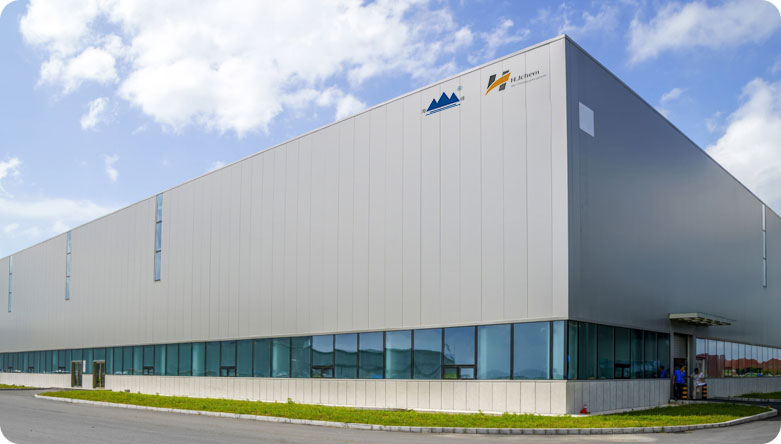
HJ Polymer operates 13 dedicated production lines within a 30,000+ m2 facility, utilizing automated process control systems to ensure efficient and stable delivery.
Collaboration
Our R&D team includes PhDs and senior engineers actively involved in national and industry standards. Custom Textile Tubes. We've also established a graduate workstation with Jiangsu University of Science and Technology, promoting integrated industry-academia collaboration.
Established In
Factory Area
Annual Production Capacity
Employees
HJ Polymer China Co., Ltd. manufactures Textile Tubes as a focused product family alongside our semi-conductive shielding compounds for power cables. The range covers the four tube types that carry, wind and store yarn through spinning, twisting, winding and dyeing: roving bobbin tubes, fine yarn spinning tubes, cone and parallel tubes, and dyeing tubes.
We supply spinning mills, twisting and winding plants, dyehouses and yarn traders who need tubes that hold their geometry at high spindle speeds, release yarn cleanly and survive repeated handling. Because we also compound polymer materials, tube body formulation, surface treatment and dimensional control are handled inside our own process rather than bought in.
As a Textile Tubes Manufacturer, we match product configuration to the application, operating limits, interfaces and acceptance criteria defined for each project.
Each tube type answers a different point in the yarn path. Roving tubes must resist compression and heat during unwinding; fine yarn tubes must run true at very high spindle speeds; cone and parallel tubes must unwind without tension spikes; dyeing tubes must pass liquor evenly through the package. We build the range around those four duties.
| Tube Type | Primary Duty | Typical Dimensions | Process Fit |
|---|---|---|---|
| Bobbin Tube (for Roving) | Carries untwisted roving; resists deformation at high-temperature unwinding | Length 445–450 mm; small-end ID 22–25 mm; large-end ID 37 mm; weight 225–300 g | Roving frames, cotton, linen, wool and synthetic fibre spinning |
| Spinning Tube (for Fine Yarn) | High-speed winding of fine yarn with low vibration and low yarn friction | Length 180–290 mm; large-end ID 17–25 mm | Ring spinning, fine-count cotton and synthetic yarn |
| Cone Tube & Parallel Tube | Controlled unwinding; anti-tangling conical geometry or stable cylindrical packages | Length 170–230 mm; small-opening ID 16–33 mm; large-opening ID 45–68 mm | Winding, rewinding, doubling and large-capacity spinning |
| Dyeing Tube | Even liquor flow through the yarn package for uniform shade | Perforation pattern and length set to the dyeing machine and package format | Package dyeing, cheese and cone dyehouses |
Tube bodies are produced in paper, engineering plastics and composite constructions, selected against the working temperature, humidity and spindle speed of the machine. Roving tubes are built with a thick wall for compressive and bending strength so the package does not deform or fracture during hot unwinding. Fine yarn tubes favour high-strength, low-weight bodies so acceleration and braking loads stay low.
Dimensional tolerances follow the textile industry standards for yarn tubes. Beyond nominal size, the specifications that decide whether a tube runs well on a given machine are surface quality, spindle fit and dynamic balance.
We configure each order against the machine, not against a catalogue default. Roving tubes are available in coloured-head, zigzag slanted-groove and arc-shaped-groove designs with a wide colour range. Fine yarn tubes are specified by length, bore and wall thickness to match the spinning frame. Cone and parallel tubes are supplied in the opening diameters and taper that suit the winder, and dyeing tubes are perforated to the dyeing machine and package format.
Configuration variables we confirm before production: tube length, small-end and large-end inner diameter, wall thickness, body weight, material grade, surface treatment and flocking direction, groove profile, colour, and packaging format.
Tube inspection is built around the failure modes that stop a spinning line: out-of-round bores that will not seat, rough surfaces that raise hairiness and broken ends, and unbalanced bodies that vibrate at speed. We check dimensional tolerance, surface condition, groove cleanliness, bore-to-spindle contact and seating height, and we run dynamic balance tests at the rated spindle speed for the tube type.
Acceptance criteria are agreed with the customer before the first production batch, so incoming inspection at the mill uses the same reference lines, gauges and vibration limits we use in-house. Where a mill runs a trial, we supply samples for machine trials before volume production.
Textile tubes are consumable tooling, and service life depends on handling discipline as much as on the tube itself. We recommend storing tubes away from direct sun and heavy loads, keeping them in the original packaging until use, and inspecting bores for damage before mounting. Reusable plastic tubes should be cleaned to a defined procedure between cycles so residual finish or fibre does not affect the next package.
A workable tube specification comes from the machine and the yarn, not from a generic size list. The following inputs let us fix dimensions, material and surface treatment and quote accurately.
| Project Input | Why We Need It |
|---|---|
| Tube type and machine model | Sets the spindle interface, taper and seating height |
| Yarn type and count | Determines grip versus slip behaviour and surface finish |
| Spindle speed and package weight | Drives wall thickness, balance limits and material grade |
| Workshop temperature and humidity | Confirms the body will not deform or soften in service |
| Required length and bore dimensions | Matches existing spindles and winders without modification |
| Colour, marking and packaging | Supports yarn identification and mill logistics |
| Order quantity and delivery schedule | Sets batch planning and shipment scope |
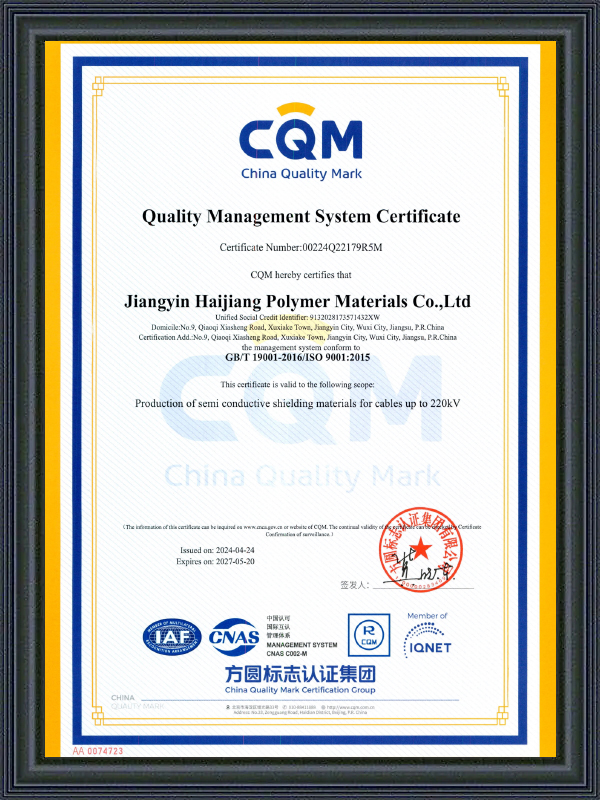
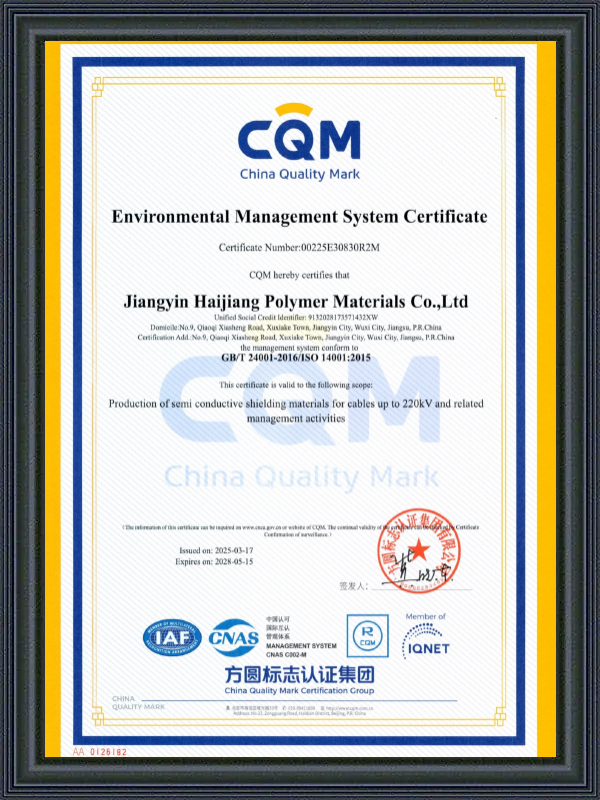
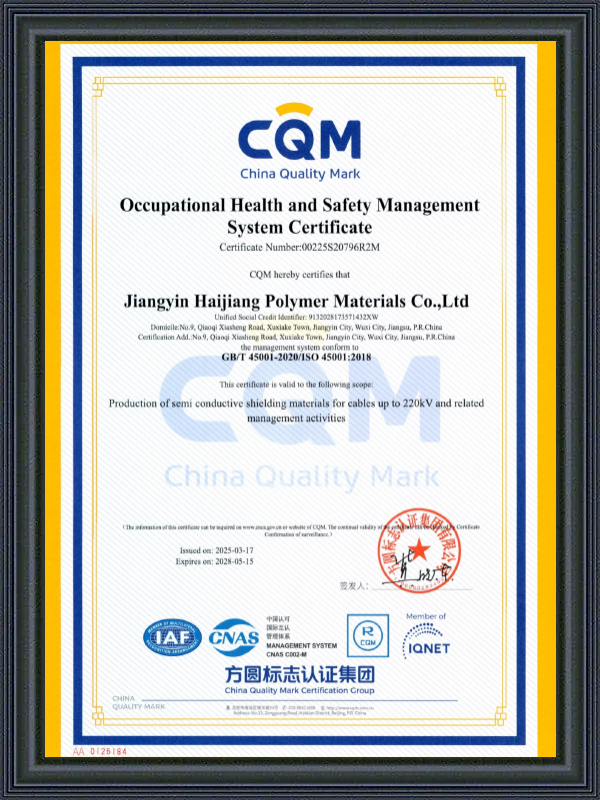
HJ Polymer China Co., Ltd. was founded in 2002 and operates from Jiangyin, Jiangsu, with a factory area of more than 30,000 m² and 13 dedicated production lines. Our core business is high-performance semi-conductive shielding compounds for power cables, with an annual production capacity of 62,000 tons, and we hold 3 authorised invention patents and 40 authorised utility model patents. The same compounding and extrusion discipline supports our product range in textile tubes.
Our R&D team includes PhDs and senior engineers, and we run a graduate workstation with Jiangsu University of Science and Technology. That materials background is what allows us to tune tube body formulation for heat resistance, stiffness and surface behaviour rather than only matching a drawing.
It depends on the process position. Roving frames use bobbin tubes with thick walls and directional flocking. Ring spinning of fine counts uses lightweight spinning tubes balanced for high spindle speeds. Winding and doubling use cone or parallel tubes, and package dyehouses use perforated dyeing tubes. We confirm the machine model and yarn before recommending a type.
Yes. We manufacture to the length, small-end and large-end inner diameter, wall thickness and weight that match your spindles and winders. Dimensional tolerances follow the textile industry standards for yarn tubes, and we agree the acceptance criteria with you before the first batch.
Balance comes from body concentricity, wall uniformity and correct bore fit. Fine yarn tubes are tested on a standard spindle at 18,000 rpm with top-of-tube vibration below 0.15 mm, and roving tubes at 1,400 rpm below 0.2 mm. Bore-to-spindle contact is held at no less than 85%.
Plastic fine yarn tubes can be cleaned and reused multiple times, which lowers cost per kilogram of yarn. We also offer recyclable and degradable body materials for mills working to energy-saving and emission-reduction targets.
Yes. We supply samples for machine trials so the tube can be run at production speed and package weight before volume production is scheduled. Trial results also let us fine-tune surface treatment and groove profile if needed.
Send the tube type, machine model, yarn type and count, spindle speed, package weight, workshop conditions, required dimensions, colour and packaging preference, plus order quantity and delivery schedule. With those inputs we can fix the specification and prepare a quotation.


