Welcome to visit the website of HJ Polymer China Co., Ltd. ---Custom LV/MV Cable Shield Compound


 中文简体
 Français
 عربى


Welcome to visit the website of HJ Polymer China Co., Ltd. ---Custom LV/MV Cable Shield Compound

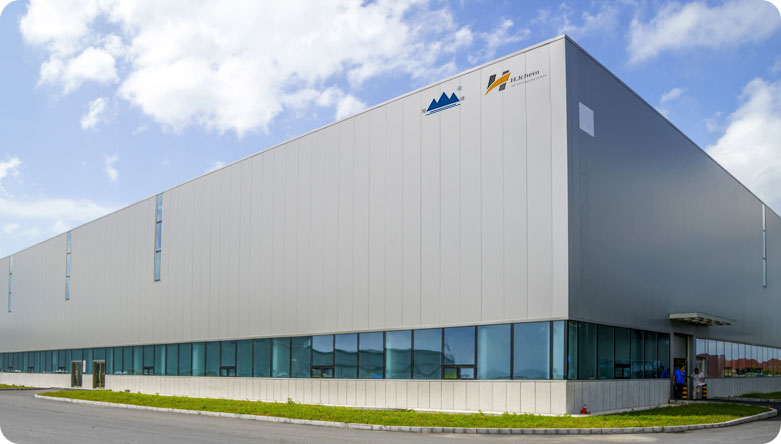
 Delivery Capacity
HJ Polymer operates 13 dedicated production lines within a 30,000+ m2 facility, utilizing automated process control systems to ensure efficient and stable delivery.
Collaboration
Our R&D team includes PhDs and senior engineers actively involved in national and industry standards. Custom LV/MV Cable Shield Compound. We've also established a graduate workstation with Jiangsu University of Science and Technology, promoting integrated industry-academia collaboration.
Established In
Factory Area
Annual Production Capacity
Employees
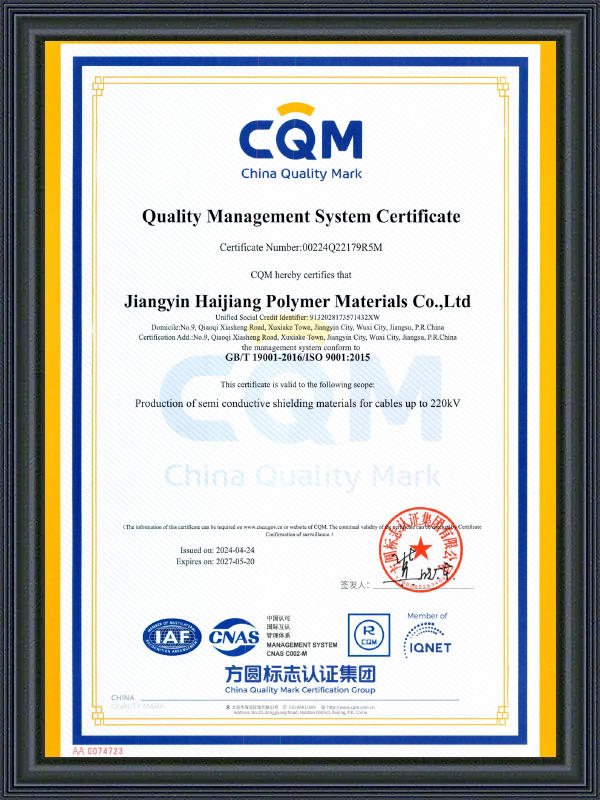
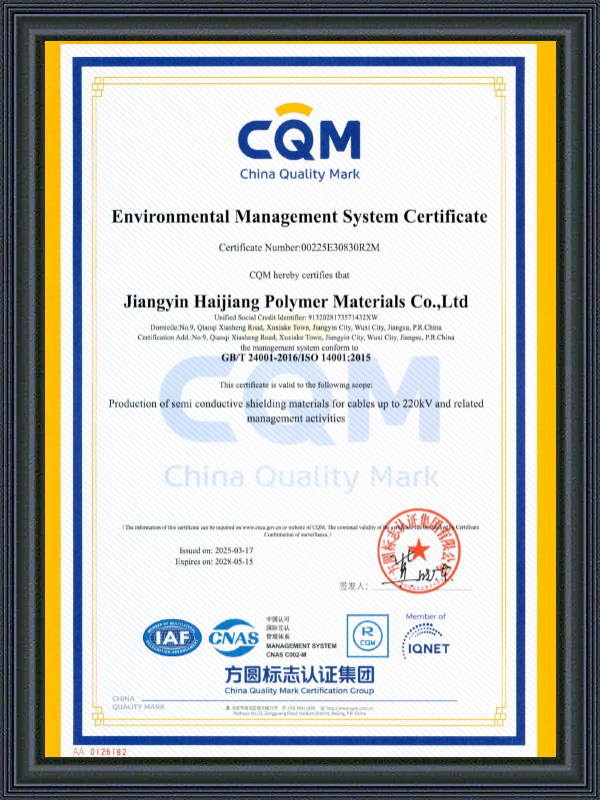
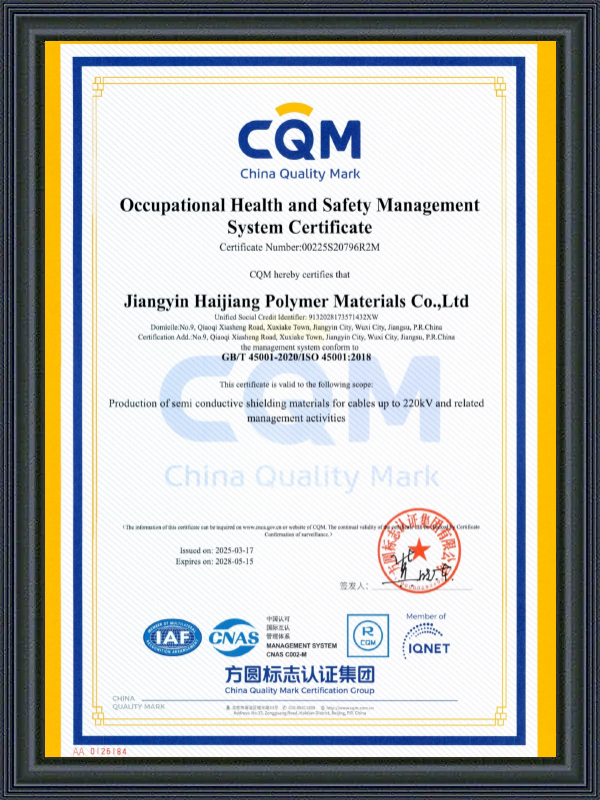
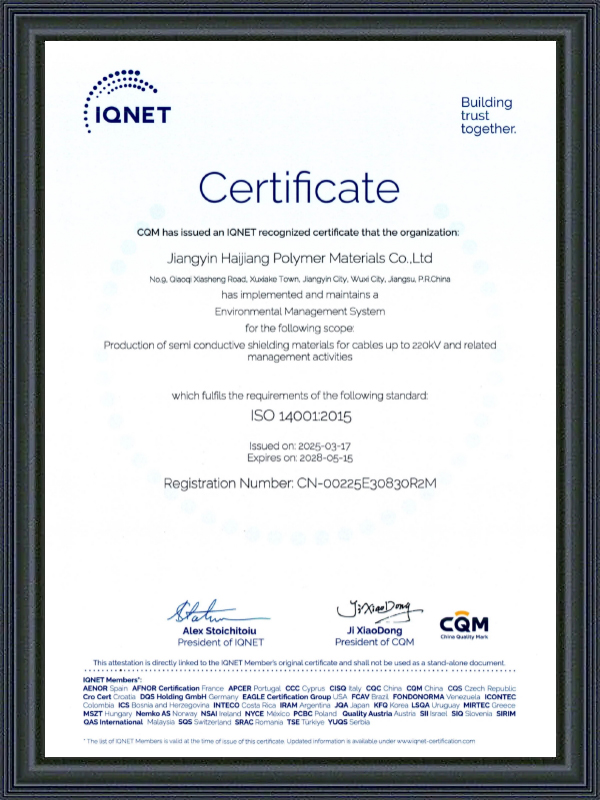
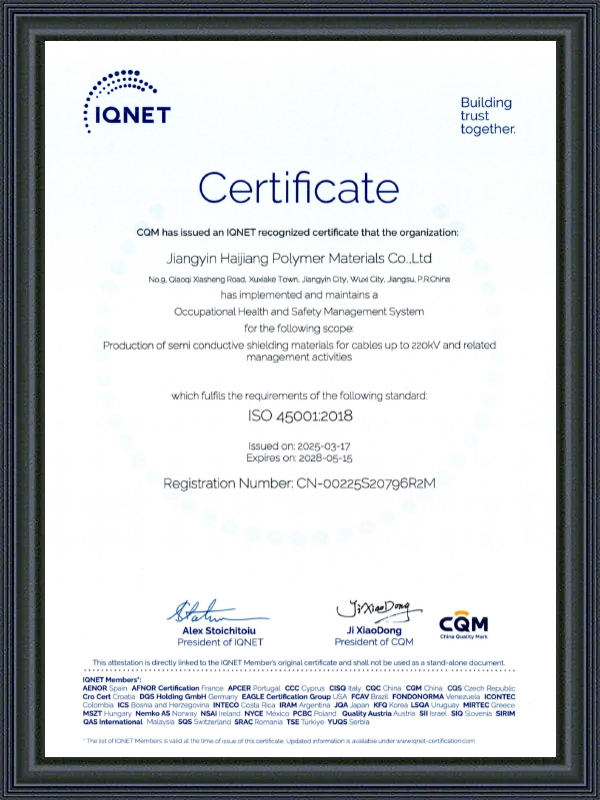
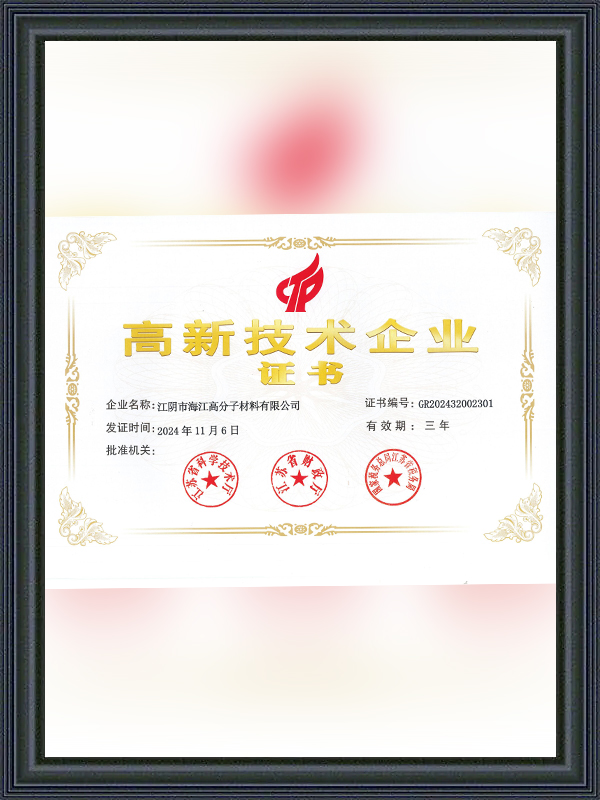
HJ Polymer China Co., Ltd. has manufactured semi-conductive shielding materials for power cables since 2002 from Jiangyin, Jiangsu. Our LV/MV Cable Shield Compound range covers conductor shielding for low-voltage distribution cables rated 1kV and below and medium-voltage cables from 6kV to 35kV, including thermoplastic grades for the Sioplas process.
Thirteen dedicated production lines and 62,000 tons of annual capacity support cable makers in more than 30 countries. The compounds are formulated around a high-purity conductive carbon black network that holds volume resistivity below 100Ω·cm, so the shield layer drains leakage current and keeps the electric field uniform across the insulation system.
As a LV/MV Cable Shield Compound Manufacturer, we match product configuration to the application, operating limits, interfaces and acceptance criteria defined for each project.
Low- and medium-voltage conductor shielding sits directly over the conductor strand, beneath the insulation. It is a thin layer in the cable cross-section, but it governs stress relief, electrical balance and long-term insulation reliability. Our grades are built for extrusion on standard conductor-shield lines and are supplied as ready-to-use compounds with consistent pellet geometry and dispersion.
Two product families are available in this category, both developed for the Sioplas (silane crosslinking) route used widely in LV and MV cable production:
| Cable Class | Typical Voltage | Shield Position | Application Context |
|---|---|---|---|
| Low-voltage power cable | 1kV and below | Conductor shield | Industrial, residential and municipal distribution networks |
| Medium-voltage power cable | 6–35kV | Conductor shield | Urban grids, industrial parks, wind and photovoltaic generation, rail transit |
| Strippable conductor shield | LV/MV | Conductor shield | Joints and terminations where controlled peel is specified |
The conductive network is formed by evenly dispersing high-purity conductive carbon black in a polymer matrix. Raw materials are selected for low impurity content to limit metal-ion contamination at the conductor interface, and the filler is bonded firmly enough within the matrix to resist migration into the insulation layer.
HJ Polymer focuses on semi-conductive shielding compounds rather than general cable compounds. The same material platform extends across the voltage classes, so a cable manufacturer running several product lines can source conductor and insulation shields from one formulation team.
Thirteen dedicated lines inside a 30,000+ m² facility run under automated process control, which keeps output stable across large orders. Annual capacity of 62,000 tons corresponds to roughly 5,200 tons per month, and the compounds are supplied to cable makers in Europe, the United States, the Middle East and Asia.
Quality management follows a certified system, and products are tested against international and Chinese industry standards including UL, IEC and GB references. Our R&D group includes PhDs and senior engineers who take part in national and industry standard work, supported by a graduate workstation with Jiangsu University of Science and Technology.
A workable recommendation depends on the cable construction and the line it will run on. We use the following inputs to select the grade, confirm the formulation and prepare a quotation.
| Project Input | Why We Need It |
|---|---|
| Cable voltage class and standard | Sets the resistivity and purity targets for the shield layer |
| Conductor size and shield thickness | Confirms extrusion window and layer geometry |
| Insulation material and crosslinking route | Matches the compound to the Sioplas or comparable process |
| Strippable or bonded requirement | Determines whether HJ0286 or a bonded grade is appropriate |
| Extruder type and line speed | Aligns melt behaviour with the customer's equipment |
| Annual volume and delivery schedule | Plans production slots and packaging format |
| Acceptance test requirements | Defines the certificate and test data supplied with each lot |
Samples are available for line trials before a full order is placed, and we welcome visits to the production facility so cable makers can review the process control and testing arrangements directly. Standard delivery lead time is one week, with packaging and pallet configuration agreed against the customer's handling equipment.
Shelf life is nine months under the recommended storage conditions. Compounds should be kept sealed, dry and away from direct sunlight, and we advise using stock in rotation so that moisture exposure before extrusion stays within the process window.
Where a standard grade does not match the line or the cable design, we develop Custom Formulated Semi-conductive Shield Compounds around the required resistivity, peel behaviour and processing window. Custom work is handled by the same formulation and process team that supports our standard LV/MV grades.
After-sales support is handled by a dedicated service team with a rapid response system, covering extrusion troubleshooting, lot data requests and repeat-order coordination.
Our conductor shielding compounds are formulated to hold volume resistivity typically below 100Ω·cm. This is achieved by dispersing high-purity conductive carbon black into a continuous conductive network within the polymer matrix, so leakage current is guided away and the electric field stays balanced across the insulation system.
Both are thermoplastic shielding compounds for the Sioplas method. HJ0283 is the standard grade for stable conductivity and smooth extrusion. HJ0286 is the strippable version, selected where the cable design calls for controlled peel force at the conductor interface, typically for joints and terminations.
Yes. The LV/MV range covers low-voltage distribution cables rated 1kV and below as well as medium-voltage cables from 6kV to 35kV. For higher voltage classes, our HV Cable Shield Compound grades serve transmission-class constructions up to 220kV.
Yes, samples are available so cable makers can run trials on their own extrusion lines before committing to volume. We also welcome visits to our Jiangyin facility to review the production lines, process control and testing arrangements.
Thirteen dedicated production lines give us an annual capacity of 62,000 tons, approximately 5,200 tons per month. Standard delivery lead time is one week, and we plan production slots against the customer's annual volume and delivery schedule.
Shelf life is nine months. Keep the material sealed, dry and out of direct sunlight, and rotate stock so that moisture exposure before extrusion remains within the recommended process window.


