Welcome to visit the website of HJ Polymer China Co., Ltd. ---Semi-conductive Compound Industry Solutions


 中文简体
 Français
 عربى


Welcome to visit the website of HJ Polymer China Co., Ltd. ---Semi-conductive Compound Industry Solutions

Content
Every cable plant that runs silane-crosslinked shielding has met the same handful of faults: a shield that comes out matte instead of glossy, a strip force that wanders from reel to reel, or a torque curve that climbs until the line has to be stopped. None of these are mysterious, and very few of them are truly the compound's fault. After more than twenty years of making semiconductive shielding compounds, we have learned that most Sioplas processing problems trace back to moisture, dispersion, dosing or temperature history, and every one of those can be checked inside a single shift.
Below we walk through the problems we hear about most often, what usually causes them, and the practical steps that bring a line back on spec. Treat it as a checklist to run through before anyone reaches for a new lot of material.
A Sioplas system is a grafted thermoplastic base supplied together with a catalyst masterbatch. Crosslinking happens after extrusion, in the sauna, not inside the barrel. That is a real advantage: no peroxide, longer continuous runs, and far less risk of scorch at high output. It also means the process depends on two disciplines that peroxide systems do not demand nearly as strictly.
The first is dryness. Any moisture that reaches the graft or the catalyst masterbatch starts curing the material before it ever leaves the die, and the result shows up as gels, die build-up and rising head pressure. The second is ratio control. A catalyst masterbatch dosed a few percent off nominal will not ruin a single drum, but it will quietly shift cure speed and strip force across a whole production run. The graft polymer's viscosity is also more sensitive to shear and temperature history than most people expect, so settings that worked on a cool morning can behave differently on a warm afternoon.
 HJ0283 Sioplas Conductor Shielding Compound for LV and MV CablesSpecified for Sioplas LV and MV cable conductor shielding, with documented moisture and shelf-life data to help plants plan drying and storage.View Product →
Our HJ0283 is formulated specifically for the Sioplas route in LV and MV cables, and we supply it with a documented moisture and shelf-life specification so plants can plan drying and storage properly rather than guessing.
A rough, dull or sharkskin surface is the most common complaint we receive, and it usually arrives together with a head pressure trend that is creeping upward. The visible defect is only the last link in the chain.
Start with a temperature profile check against the supplier's data sheet, then inspect the die lips and the screen pack before changing anything else. Record head pressure at the start and end of every reel; a slow, steady rise over several hours is a much earlier warning than a visible defect.
Porosity in the shield cross-section, or voids right at the conductor interface, almost always means gas that had nowhere to go. In a silane system the usual source is water rather than air.
Cold bags brought into a warm, humid plant will sweat, and the condensation ends up in the hopper. Pellets that were stored without a sealed liner pick up moisture slowly and then release it violently in the compression zone. A starved feed throat pulls air in with the granules, and a vacuum hopper that is not actually pulling its rated vacuum gives a false sense of security.
A torque curve that climbs, surges, and then ends in a hard stop with dark specks is the classic signature of premature crosslinking inside the machine. It is worth saying plainly that this is nearly always a process event, not a bad batch.
The usual suspects are an overdosed or poorly blended catalyst masterbatch, dead spots in a die adapter, a screw with worn flights that traps material, and long residence times caused by running a large machine at very low output. Every one of these gives the grafted material the time and the temperature it needs to cure where you do not want it to.
Calibrate the gravimetric dosing of the two components at the start of each shift and log the actual ratio, not the setpoint. Keep the barrel profile flat and below the supplier's stated limit instead of chasing a hotter die to improve surface finish. Purge before any planned stop longer than a few minutes, and run a colour-change residence test whenever a new screw or adapter is fitted.
Strippable insulation shields live or die on consistency. Too high a strip force and the installer risks nicking the insulation; too low and the shield lifts during bending or termination. What plants notice first is scatter: good reels, then a difficult one, then good again, with no obvious pattern.
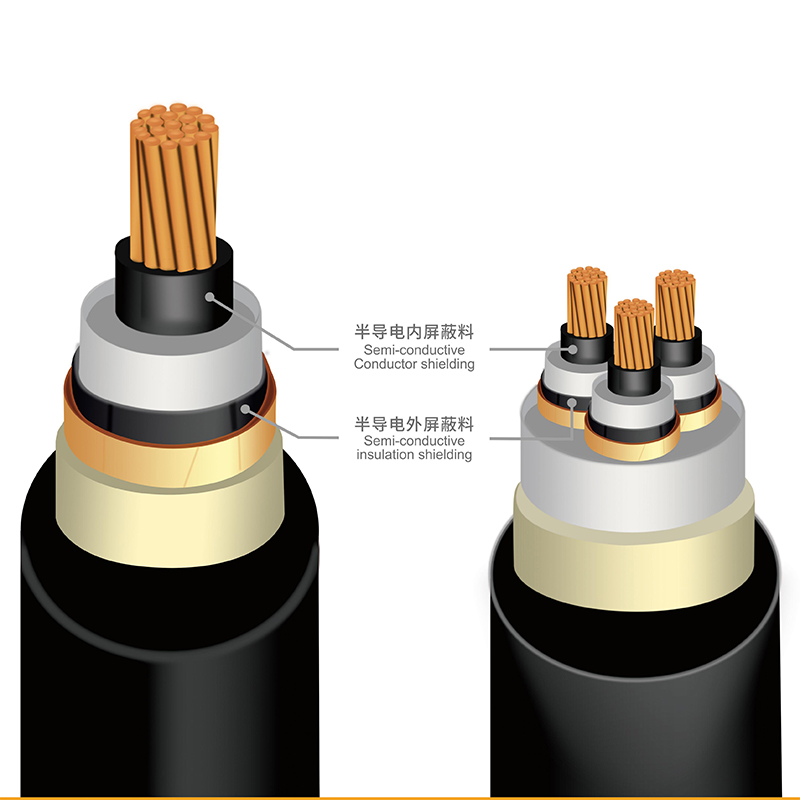 HJ0286 Strippable Sioplas Shielding Compound for Overhead CablesA strippable Sioplas shielding grade for warm-water cross-linked overhead cables, with adhesion and processing characteristics relevant to consistent strip force.View Product →
Our HJ0286 is the strippable grade in the same Sioplas family, and the questions we ask when a customer reports scatter are always the same ones. Has the catalyst ratio drifted since the qualified run? Has the melt temperature moved by more than a few degrees? Was the insulation surface clean and dry before the shield went on? And is the pull test itself repeatable, with a fixed speed, a defined specimen geometry and a controlled conditioning time?
Lock the extruder settings after a qualified run and treat them as a recipe, not a starting point. Test per reel rather than per batch, condition samples before testing, and accept that storage time between extrusion and test can move the number by itself. A supplier who understands the interface will help you set a realistic window instead of a single target value.
Shield resistance that sits just above specification, or that drifts within a single lot, is a quieter problem than a rough surface but a more expensive one if it reaches a finished cable.
Resistivity depends on how well the carbon black network is developed, and that network is shaped by dispersion quality, shear history and contamination. Regrind has no place in a semiconductive layer. A hopper that previously held insulation compound, or a screen pack that has been blinded for hours and is now generating extra shear, will both move the number. Moisture makes it worse by introducing voids that interrupt the conductive path.
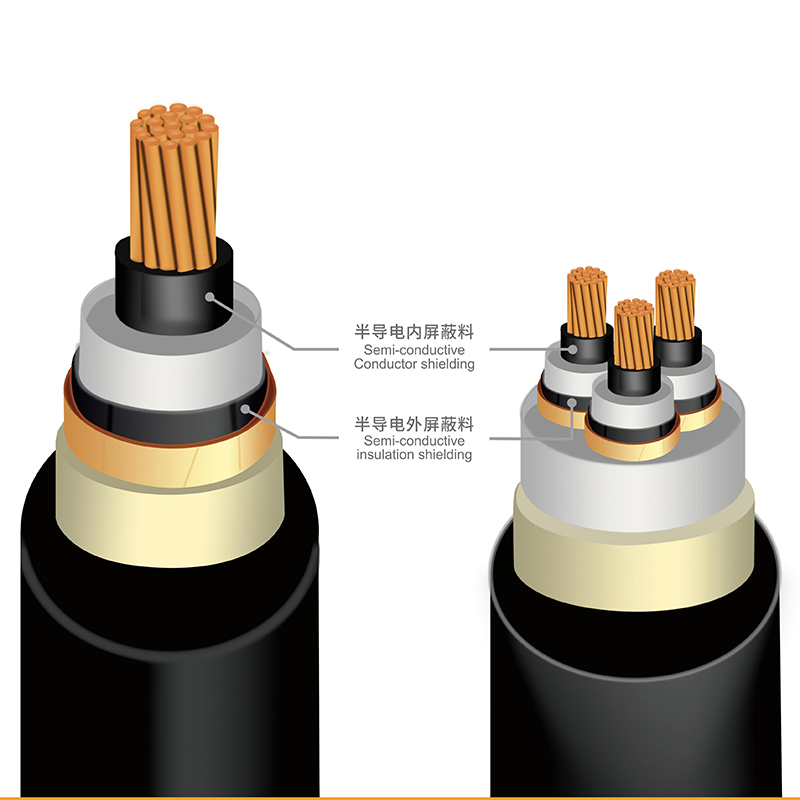 HJ0302 Medium-Voltage Conductor and Insulation Shielding CompoundCross-linkable bonded compound for conductor and insulation shielding up to 36 kV, formulated for dry vulcanization lines and stable volume resistivity.View Product →
Grades such as HJ0302, which serves both conductor and insulation shielding duties in MV cables, are formulated with a dispersion window that tolerates normal plant variation, but only if the machine is clean and the filter is healthy. Measure resistance on a pressed plaque from each lot with a four-terminal method, and quarantine anything that trends toward the limit rather than shipping it and hoping.
Two failures tend to appear together at the back end of the line. The first is pellets that have fused into hard lumps in the bag or silo, which then fail to feed and cause surging. The second is a hot-set result that comes back above specification after the sauna, even though everything looked fine at extrusion.
Blocking is a storage issue: warm warehouses, tall stacks and long dwell times all encourage it, and fused lumps should never be broken up and fed back into a shielding layer. Cure failures usually come down to the sauna rather than the compound. Verify humidity, temperature and dwell time with a data logger inside the chamber, remember that thick walls need longer than thin ones, and confirm the catalyst ratio has not drifted before blaming the material. Run hot-set checks to the relevant cable standard on a fixed schedule rather than only when a customer asks.
The table below is the short version we keep on the wall in our own technical service room. Use it to decide what to check first, then work through the relevant section above.
| What you see | Most likely cause | First step |
|---|---|---|
| Dull or rough shield surface | Low die temperature, drool or gels | Clean die lips and check the melt profile |
| Voids or porosity | Moisture or air entrapment | Verify drying and hopper vacuum |
| Head pressure creeping up | Gels, fines or early cure | Change the screen pack, check the A/B ratio |
| Torque swing then stall | Premature crosslinking | Purge, recalibrate dosing, inspect screw wear |
| Strip force scatter | Ratio or temperature drift, test method | Lock settings and standardise the pull test |
| Resistance above spec | Poor dispersion or contamination | Quarantine the lot, check purging and filter |
| Hard lumps in the bag | Warm storage and blocking | Cool, dry, first-in-first-out storage |
There is a point where the line checks are done and the numbers still do not add up. That is the moment to send the supplier a data pack rather than a single complaint: the temperature profile, head pressure trend, dosing records, moisture readings and a sample of the failed section. With that in hand, a compound manufacturer can usually tell within a day whether the issue sits in the material or in the process.
Our own notes on bonded and strippable MV conductor shield requirements go deeper into how those interfaces are specified, and they are a useful companion to this checklist. Because we run thirteen dedicated lines and produce around 62,000 tonnes of semiconductive compound a year, we see these faults across many plants and machine types, and the patterns are remarkably consistent.
If you are commissioning a new Sioplas line, changing machine or moving to a strippable construction for the first time, send us your process window before the first production run. It is far easier to set a stable baseline together at the start than to chase scatter for a month afterwards.