Welcome to visit the website of HJ Polymer China Co., Ltd. ---Semi-conductive Compound Industry Solutions


 中文简体
中文简体 Français
 عربى
عربى

Welcome to visit the website of HJ Polymer China Co., Ltd. ---Semi-conductive Compound Industry Solutions

Content
Choosing between a bonded and a strippable insulation shield looks like a material question, but it is really a system question. The compound has to match the insulation it sits on, the extrusion line that runs it, the jointer who cuts it back on site, and the test regime it must survive for decades. In our experience supplying semiconductive compounds to cable makers, the designs that age gracefully are the ones where those four things were decided together rather than one after another.
This article walks through the trade-offs honestly, without pretending one answer fits every design.
The insulation shield is a thin semiconductive layer applied directly over the primary insulation. Its job is to make the electric field at the insulation surface uniform and radial, so that no tangential stress and no local field enhancement develops where the insulation meets the outside world. That sounds simple. In practice, the layer is only as good as its interface.
Any protrusion, contamination, or microscopic void at that boundary concentrates stress. Over years of thermal cycling and moisture exposure, a poor interface becomes the starting point for water treeing and eventually for breakdown. This is why the industry obsesses over smoothness, cleanliness, and adhesion of semiconductive compounds rather than just volume resistivity.
The conductor shield gets most of the attention in textbooks, but the insulation shield determines how the finished cable behaves at joints and terminations, where the shield must be removed without wounding the insulation. That removal step is where bonded and strippable designs part ways.
A bonded shield is formulated to develop an adhesive bond with the crosslinked insulation that is essentially permanent. The interface stays tight under load and thermal cycling, which gives excellent field control and leaves little room for voids or moisture ingress along the boundary. The trade-off appears at installation: removing the shield at a joint requires a trained jointer, controlled cutting depth, and a proper stripping tool. Done well, it is clean. Done carelessly, the insulation is scored and the joint is compromised before it is even assembled.
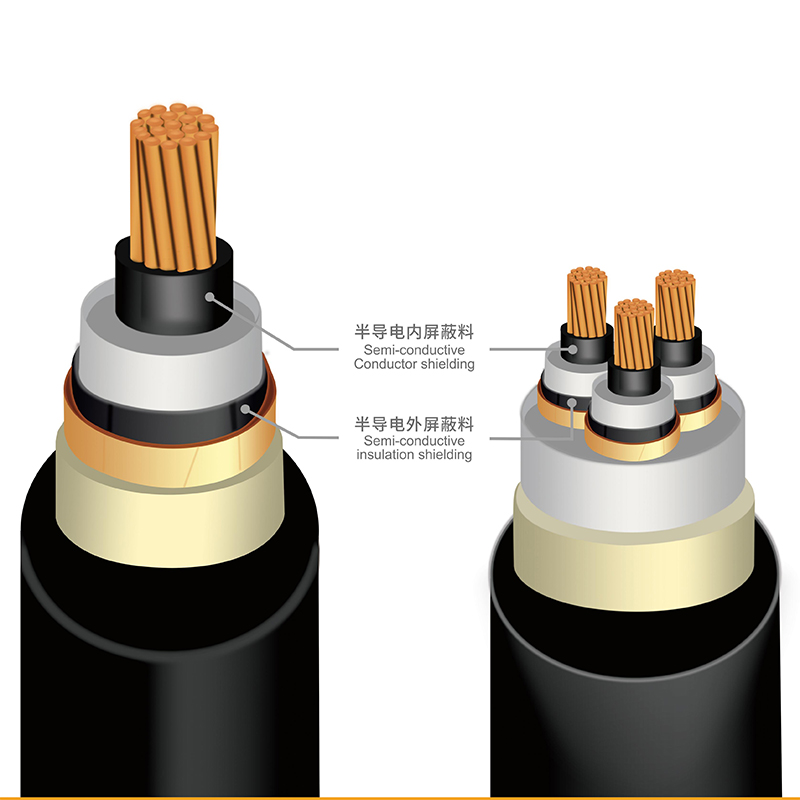 HJ0601 Strippable Semi-Conductive Insulation Shielding CompoundCross-linkable strippable shielding compound for medium-voltage cables up to 36 kV, supporting clean joint removal and smooth high-speed extrusion.View Product →
A strippable shield is formulated so the bond is strong enough to hold in service but releases cleanly when pulled with hand tools. The keyword is controlled: "strippable" never means loose. A good strippable compound holds a stable peel force across the temperature range the cable sees, and still releases predictably after years of aging. If adhesion drifts upward, the shield fights the jointer; if it drifts downward, the layer can lift or wrinkle in service. Both failure modes are formulation and process problems, not installation problems.
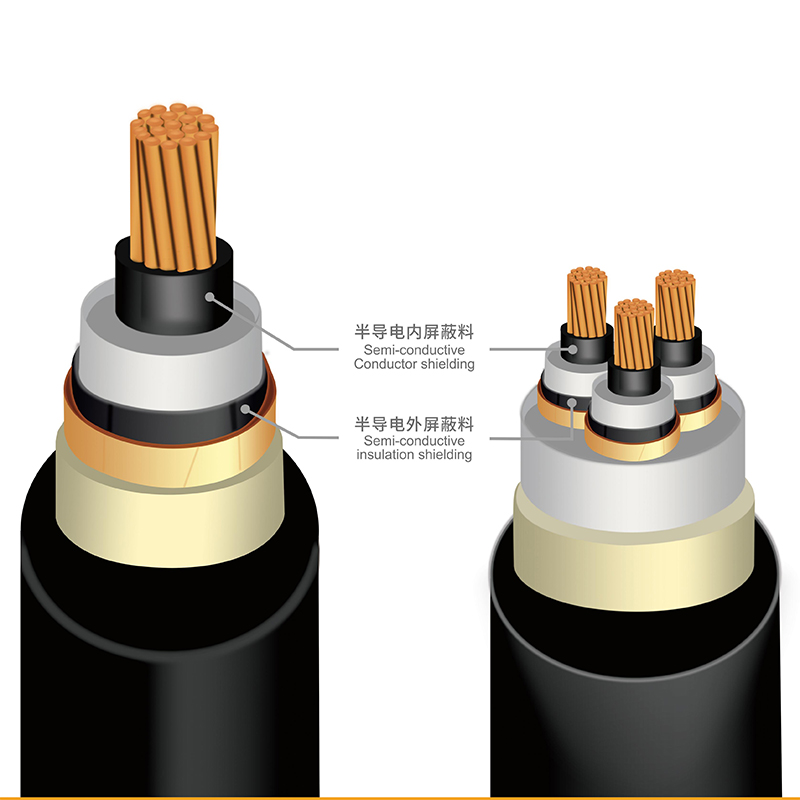 HJ0602 Easy-Strippable Semi-Conductive Insulation Shielding CompoundEasy-strippable shielding compound for medium-voltage cables up to 36 kV, with low peel force to ease jointing and on-site maintenance.View Product →
| Factor | Bonded shield | Strippable shield |
|---|---|---|
| Bond to insulation | Intimate and effectively permanent | Controlled and releasable |
| Removal at joints | Requires trained jointer and controlled tools | Pulls or peels with hand tools |
| Interface quality | Very tight, minimal void risk | Good, provided adhesion stays stable |
| Sensitivity to installer skill | Higher | Lower |
| Main risk if properties drift | Difficult removal, possible insulation damage | Poor release or lifting of the layer |
| Typical emphasis | Maximum interface integrity | Serviceability and jointing speed |
The most reliable way to choose is to work backwards from the field. Ask who will terminate the cable, with what tools, in what environment, and how often. A utility with a stable, well-trained jointing workforce and a preference for maximum interface integrity will usually lean bonded. A market with many small contractors, tight outage windows, and variable skill levels often benefits from a strippable design that reduces the chance of insulation damage.
Also consider the accessory system. Prefabricated joints, separable connectors, and cold-shrink bodies are all qualified against a defined shield behaviour. If the cable shield strips harder than the accessory assumes, the joint is at risk even when every component individually meets its own specification.
Process capability decides whether a formulation can deliver what it promises. Peroxide-crosslinked systems and thermoplastic SIOPLAS-type processes put different demands on the compound, and line speed, screw design, and cooling profile all influence the final interface. A compound that performs beautifully at low output can develop surface imperfections at the speeds a fast line demands.
For thermoplastic and SIOPLAS designs, strippability can be built into the polymer system directly, which simplifies jointing without sacrificing smoothness. That route is worth evaluating when the line is already configured for thermoplastic processing and the end user wants predictable hand-stripping.
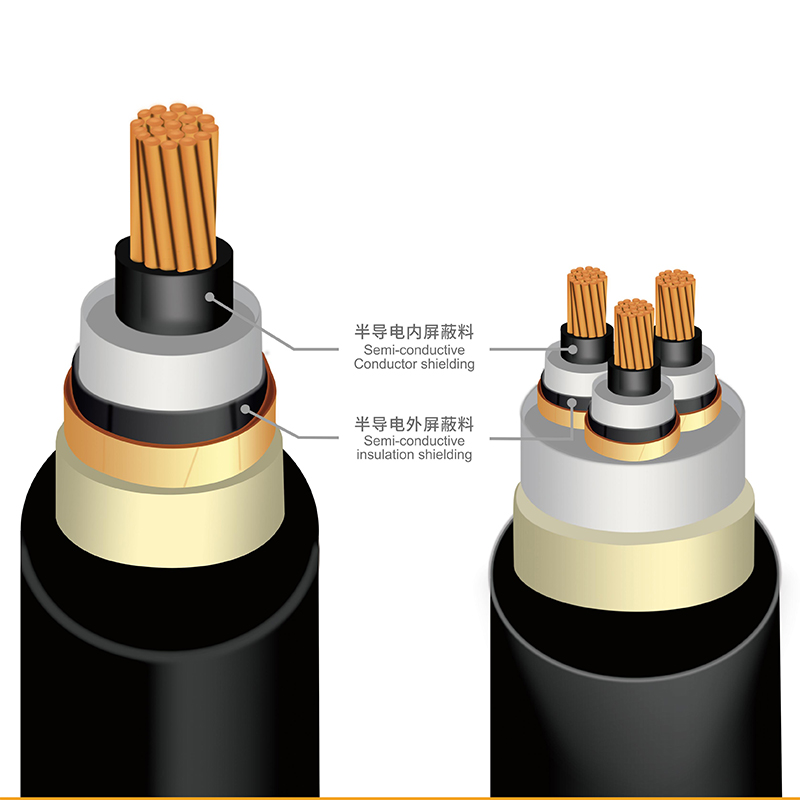 HJ0286 Strippable Thermoplastic Shielding Compound for Sioplas CablesThermoplastic semi-conductive shielding compound for silane cross-linkable overhead cables, designed for mechanical stripping and stable high-temperature extrusion.View Product →
Whatever the process, verify the compound on your own equipment. Pilot runs reveal more about adhesion and surface quality than any datasheet.
Once the mechanical decision is made, compare candidates on the properties that govern long-term behaviour: surface smoothness, cleanliness, volume resistivity, and the stability of adhesion or peel force after thermal and wet aging. Smoothness matters most at the interface, where protrusions amplify stress. Cleanliness matters because a single contaminant particle can act as a field enhancement point for the life of the cable.
If the design will operate in wet environments, water tree resistance deserves explicit attention. Both bonded and strippable systems can be formulated for it, but the test data should come from aged samples, not fresh ones. Peel force measured on day one tells you very little about year fifteen.
Bonded and strippable shields are evaluated under the same broad families of standards, but the acceptance criteria and test methods differ in emphasis. Expect to demonstrate strippability or adhesion at temperature extremes, and to show that the property remains within limits after aging. Our technical team has written about how conductor shield requirements, adhesion behaviour, and standard practice fit together, which is a useful companion read on the conductor side of the same design question: bonded, strippable and standards for MV conductor shield compounds.
Where a specification quotes a peel-force window, treat it as a process control target, not a formality. Small shifts in extrusion temperature or crosslinking conditions can move the result measurably.
None of this is really about picking a winner between two philosophies. It is about matching a formulation to your line, your accessories, and your market. A supplier who understands all three can save a design cycle or two.
We have been making semiconductive shielding compounds since 2002, with thirteen dedicated production lines and an annual capacity of 62,000 tonnes of medium and high voltage material at our Jiangyin site. Our engineers have supported cable makers through the qualification of bonded and strippable grades alike, and we hold UL certification along with a portfolio of granted patents in cable shielding composites. If you are weighing options for a new design, it is worth looking through our insulation shielding compounds for medium voltage cables and talking through the jointing conditions with us before you lock the specification. The right answer tends to become obvious once the field reality is on the table.
![HJ0302 Semi-conductive Insulation And Conductor Shielding Compound for MV Power Cables [Bonded Insulation Grade]](/hjcheme/2026/01/30/1-oGlm.jpg "HJ0302 Semi-conductive Insulation And Conductor Shielding Compound for MV Power Cables [Bonded Insulation Grade]")
![HJ0901 Semi-conductive Conductor and Insulation Shielding Compound for HV Power Cables [Super Clean and Smooth]](/hjcheme/2026/02/04/5-zhjG.jpg "HJ0901 Semi-conductive Conductor and Insulation Shielding Compound for HV Power Cables [Super Clean and Smooth]")
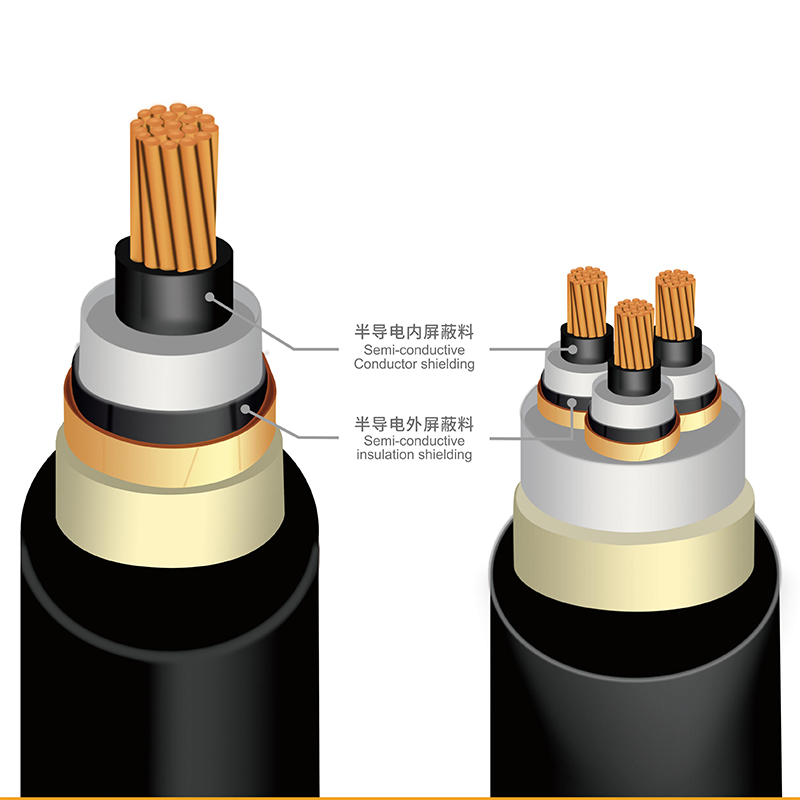
![HJ0304 Semi-conductive Conductor Shielding for MV Power Cables [Fast Line Speed Grade]](/hjcheme/2026/01/30/2-lp3Q.jpg "HJ0304 Semi-conductive Conductor Shielding for MV Power Cables [Fast Line Speed Grade]")
![HJ0305 Semi-conductive Conductor Shielding Compound for MV Power Cables [Copper oxidation resistance Grade]](/hjcheme/2026/01/30/2-ybjb.jpg "HJ0305 Semi-conductive Conductor Shielding Compound for MV Power Cables [Copper oxidation resistance Grade]")
![HJ0602 Semi-conductive Insulation Shielding Compound For MV Power Cables [Easy Strippable Grade]](/hjcheme/2026/01/30/5-EN1N.jpg "HJ0602 Semi-conductive Insulation Shielding Compound For MV Power Cables [Easy Strippable Grade]")



