Welcome to visit the website of HJ Polymer China Co., Ltd. ---Semi-conductive Compound Industry Solutions


 中文简体
中文简体 Français
 عربى
عربى

Welcome to visit the website of HJ Polymer China Co., Ltd. ---Semi-conductive Compound Industry Solutions

Content
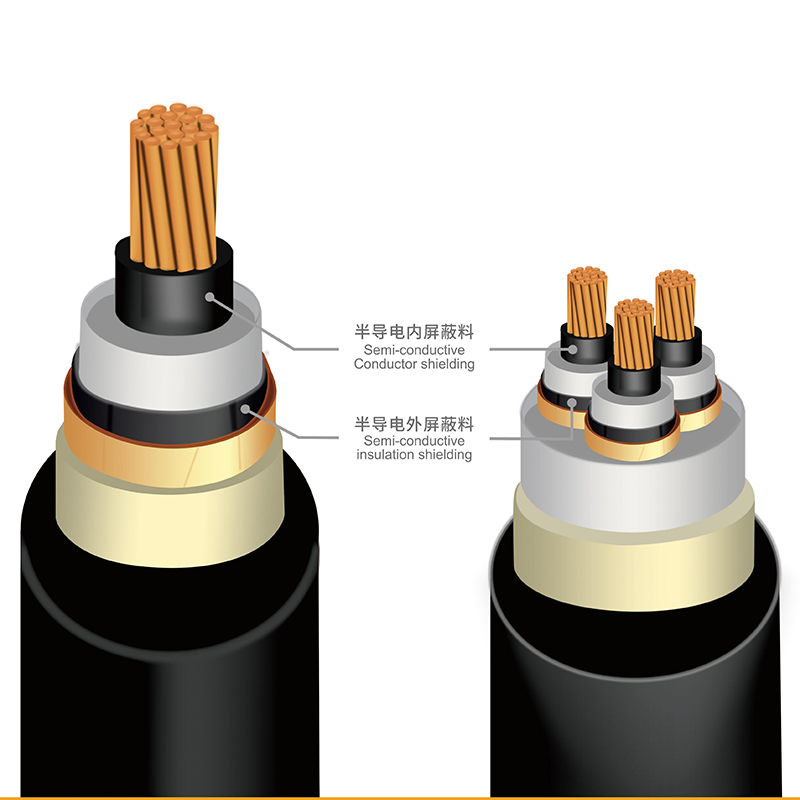
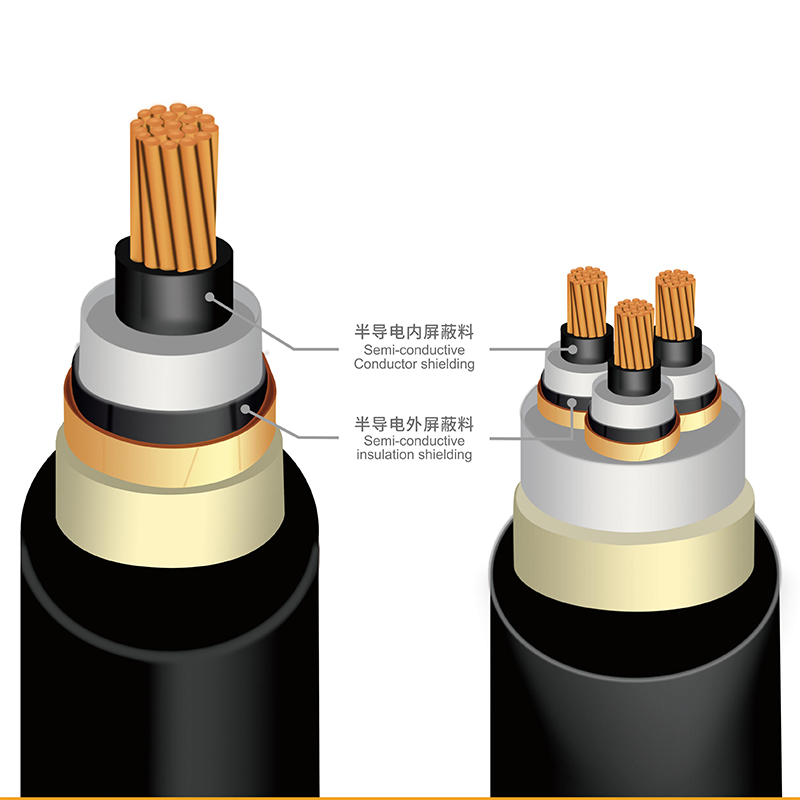
The same category of material — a carbon-black-loaded polyolefin shield compound — sits inside both a 15 kV distribution cable and a 500 kV transmission cable. What's different is how much tolerance for imperfection each application allows, and that tolerance shrinks dramatically as voltage climbs.
A defect that a medium-voltage cable would shrug off for decades can become a failure point in an HV or EHV cable within a fraction of that service life, simply because the electrical stress at the same physical flaw is many times higher. This is why HV and EHV specifications don't introduce fundamentally different chemistry so much as they push the same base formulation family — polyolefin resin, conductive carbon black, cross-linking system — toward far tighter control over smoothness, cleanliness, and process consistency.
Three areas capture most of that tightening: surface smoothness measured at a resolution most MV specifications don't bother with, ionic cleanliness tracked down to trace contamination levels, and manufacturing defects — like weld lines from co-extrusion — that only start to matter once the margin for error narrows this far.
Standard semi-conductive shield specifications count protrusions in the 50 to 100 micrometer range. HV and EHV cable applications push the measurement window down an order of magnitude, using a profilometer to catalog protrusions in 10-micron increments across a 20 to 70 micrometer range, with defect density reported per square meter rather than per square centimeter.
This isn't measurement for its own sake. Research comparing conventional and super-smooth conductor shields found that the micro-protrusions on super-smooth material are noticeably flatter in shape, which translates directly into lower localized electrical stress at the insulation interface. A protrusion's height matters, but so does its shape — a sharp spike concentrates field lines far more than a low, rounded bump of the same height.
Achieving this level of smoothness comes down to carbon black dispersion quality and extrusion process control working together. The carbon black itself has to be selected for particle characteristics that disperse cleanly, and the extrusion line has to maintain consistent shear and temperature to avoid reintroducing defects that better raw materials alone can't prevent.
Water-soluble ionic impurities in semi-conductive HV Cable Shield Compound have a documented effect on the number and size of water trees that develop in the adjacent insulation, which makes cleanliness a functional property rather than a cosmetic one. HV and EHV cable manufacturers evaluate this using inductively coupled plasma (ICP) spectroscopy to quantify trace ionic contamination and sulfur content in candidate compounds.
Comparative testing has shown that super-smooth shield formulations tend to carry substantially lower levels of ionic impurities and sulfur than conventional grades, though conventional shield cleanliness has also improved over time as the broader industry has tightened its raw material sourcing. The carbon black grade is usually the dominant variable here — earlier research on HV cable shields found that switching to acetylene black meaningfully reduced mineral impurity concentrations compared to other carbon black types, directly supporting longer cable life expectations.
For a buyer evaluating shield compound, cleanliness data isn't always volunteered on a standard datasheet the way mechanical or electrical properties are. Requesting ICP results or equivalent impurity data as part of a qualification package is a reasonable ask for any HV or EHV procurement, since two compounds with identical resistivity and smoothness numbers can still differ meaningfully in long-term water tree resistance based on impurity content alone.
Co-extrusion — running the conductor shield, insulation, and insulation shield through the extrusion head simultaneously — introduces a defect category that has nothing to do with the compound's formulation and everything to do with how two melt streams meet. Where separate streams of semi-conductive shield material converge inside the extrusion head, a weld line can form, and protrusions have a tendency to develop at exactly that seam.
Under the stress levels typical of HV and EHV operation, protrusions forming at a weld line location can create the same kind of localized field concentration as any other surface defect, with the added complication that weld line defects are tied to tooling and process geometry rather than raw material quality alone. A compound that tests clean and smooth in isolation can still produce weld-line protrusions once it's actually run through a specific extrusion head design.
This is part of why HV and EHV shield qualification increasingly looks at compound and process together rather than compound properties in isolation — a formulation optimized to resist weld line protrusion formation, paired with extrusion tooling designed to minimize melt-stream convergence stress, addresses a failure mode that neither factor alone fully controls.
High-voltage direct current cable places demands on shield compound that alternating current systems don't. Under sustained DC voltage, space charge can accumulate at the interface between the semi-conductive shield and the insulation, distorting the electric field distribution in ways that AC systems, with their constantly reversing polarity, largely avoid.
HVDC-specific shield formulations address this with a few targeted additions to the base recipe: an ethylene copolymer selected for low crystallinity and low catalyst residue, a carbon black chosen specifically for low ionic species content, a polar polymer modifier included to enhance field conductivity and space charge leakage at high fields, and an ion scavenger to reduce ionic mobility within the compound itself.
None of these components appear in a typical AC shield formulation, which is why HVDC shield compound generally can't be treated as a drop-in substitute for HVAC-rated material even when both meet similar smoothness and resistivity specifications on paper. The underlying electrical behavior each is designed around is different enough to require its own formulation approach.
Qualifying a HV Cable Shield Compound for HV or EHV use means going beyond the resistivity and standard smoothness figures that suffice for lower-voltage applications. At minimum, ask for profilometer data reported in the finer 10-micron increments used for super-smooth grades, along with defect density per square meter rather than the coarser per-square-centimeter figures common in general specifications.
Request ionic impurity data, ideally from ICP spectroscopy or an equivalent method, and ask which carbon black grade is used in the formulation — the difference between acetylene black and other carbon black types has a measurable effect on impurity levels and, by extension, on long-term water tree performance.
If the application is HVDC, confirm the compound was formulated specifically for DC service rather than adapted from an AC product line, and ask about the ion scavenger and polar modifier system used. Finally, where possible, evaluate compound performance in combination with the actual extrusion tooling that will be used in production, since weld line behavior is a property of the compound-and-process combination rather than the compound alone.
![HJ0901 Semi-conductive Conductor and Insulation Shielding Compound for HV Power Cables [Super Clean and Smooth]](/hjcheme/2026/02/04/5-zhjG.jpg "HJ0901 Semi-conductive Conductor and Insulation Shielding Compound for HV Power Cables [Super Clean and Smooth]")
![HJ0603 Semi-conductive lnsulation Shielding Compound for MV Power Cables [Super Clean Grade]](/hjcheme/2026/01/30/1-h8nu.jpg "HJ0603 Semi-conductive lnsulation Shielding Compound for MV Power Cables [Super Clean Grade]")
![HJ0302 Semi-conductive Insulation And Conductor Shielding Compound for MV Power Cables [Bonded Insulation Grade]](/hjcheme/2026/01/30/1-oGlm.jpg "HJ0302 Semi-conductive Insulation And Conductor Shielding Compound for MV Power Cables [Bonded Insulation Grade]")
![HJ0305 Semi-conductive Conductor Shielding Compound for MV Power Cables [Copper oxidation resistance Grade]](/hjcheme/2026/01/30/2-ybjb.jpg "HJ0305 Semi-conductive Conductor Shielding Compound for MV Power Cables [Copper oxidation resistance Grade]")